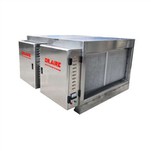
The working principle of the electrostatic precipitator is to use a high-voltage electric field to ionize the flue gas, and the dust charge in the air flow is separated from the air flow under the action of the electric field. The negative electrode is made of metal wires with different cross-sectional shapes, which are called discharge electrodes.
The positive electrode is made of metal plates of different geometric shapes, which are called dust collecting electrodes. The performance of an electrostatic precipitator is affected by three factors: dust properties, equipment configuration, and flue gas flow rate. The specific resistance of dust is an index to evaluate the conductivity, which has a direct impact on the dust removal efficiency. If the specific resistance is too low, it is difficult for the dust particles to remain on the dust collecting electrode, causing it to return to the airflow. If the specific resistance is too high, the charge of the dust particles reaching the dust collecting electrode is not easy to be released, and the formation of a voltage gradient between the dust layers will cause local breakdown and discharge. These conditions will cause the dust removal efficiency to drop.