
The purification effectiveness of commercial kitchen electrostatic smoke filters depends heavily on the cleanliness of the exhaust ducts. Many businesses regularly maintain commercial kitchen electrostatic smoke filters but neglect duct cleaning. This leads to a conflict between efficient operation of commercial kitchen electrostatic smoke filters and the accumulation of grease and dirt in the ducts, ultimately affecting overall oil fume emission.

Three major impacts of grease buildup in ducts on commercial kitchen electrostatic smoke filters:
1. Increased air resistance:
When grease buildup in ducts reaches a thickness of 0.5 cm, air resistance increases by 30%, reducing the actual airflow handled by commercial kitchen electrostatic smoke filters. This causes oil smoke to stagnate in the ducts and some unpurified oil smoke to escape from the exhaust hood.
2. Secondary contamination:
Old grease buildup in ducts can be dislodged by airflow disturbances, entering the commercial kitchen electrostatic smoke filters and clogging the filter screen or plates, reducing purification efficiency. A Western-style restaurant experienced low purifier efficiency even after cleaning, ultimately attributing it to grease buildup in the ducts.
3. Shortened lifespan:
Increased air resistance forces the purifier fan to overload, increasing motor temperature and shortening its lifespan by 20%-30%.
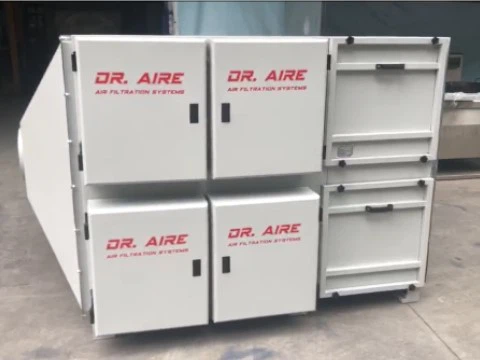
Coordinating the frequency of duct cleaning and electrostatic smoke filter maintenance in commercial kitchens:
Heavy oil smoke kitchens (Chinese restaurants, barbecues): Clean the ducts every three months, concurrently with deep maintenance of the commercial kitchen electrostatic smoke filters. Kitchens with minimal oil smoke (Western-style, light meals): Clean the ducts every six months, one month earlier than the electrostatic smoke filter maintenance cycle in commercial kitchens, to prevent grease from detaching and affecting the equipment.

When cleaning, pay attention to the area where the duct connects to the purifier, which is the most susceptible to grease accumulation. This area must be cleaned specifically to ensure unobstructed connections and smooth airflow throughout the exhaust system.

Proper Duct Cleaning Methods
1. Mechanical Cleaning:
A duct cleaning robot uses a high-pressure water jet and a rotating brush head to remove grease. This is suitable for main ducts with a diameter of 30 cm or more. The robot penetrates deep into the duct, thoroughly cleaning the grease without damaging it.
2. Chemical Cleaning:
For ducts with many bends and small diameters, a food-grade degreaser can be used for a continuous soaking process to dissolve the grease before rinsing with clean water. Food-grade degreasers not only effectively remove grease but also do not pollute the ducts or the environment, and they also minimize the risk of compromising food safety.
3. Combined Testing:
Regardless of the cleaning method used, post-cleaning testing is necessary to ensure effectiveness. The inner walls of the pipes can be inspected with an endoscope. A qualified clean is only considered acceptable if the remaining grease is ≤0.1 cm thick.

By integrating pipe cleaning into the "supporting project" of oil fume treatment, and forming a complete closed loop with the maintenance of commercial kitchen electrostatic smoke filters, the efficient operation of the entire exhaust system can be truly ensured, avoiding the "clean commercial kitchen electrostatic smoke filters, dirty pipes" management blind spot. Only by working together and coordinating these two approaches can oil fume emissions from catering establishments meet standards, creating a healthy and comfortable environment for consumers and surrounding residents.


